
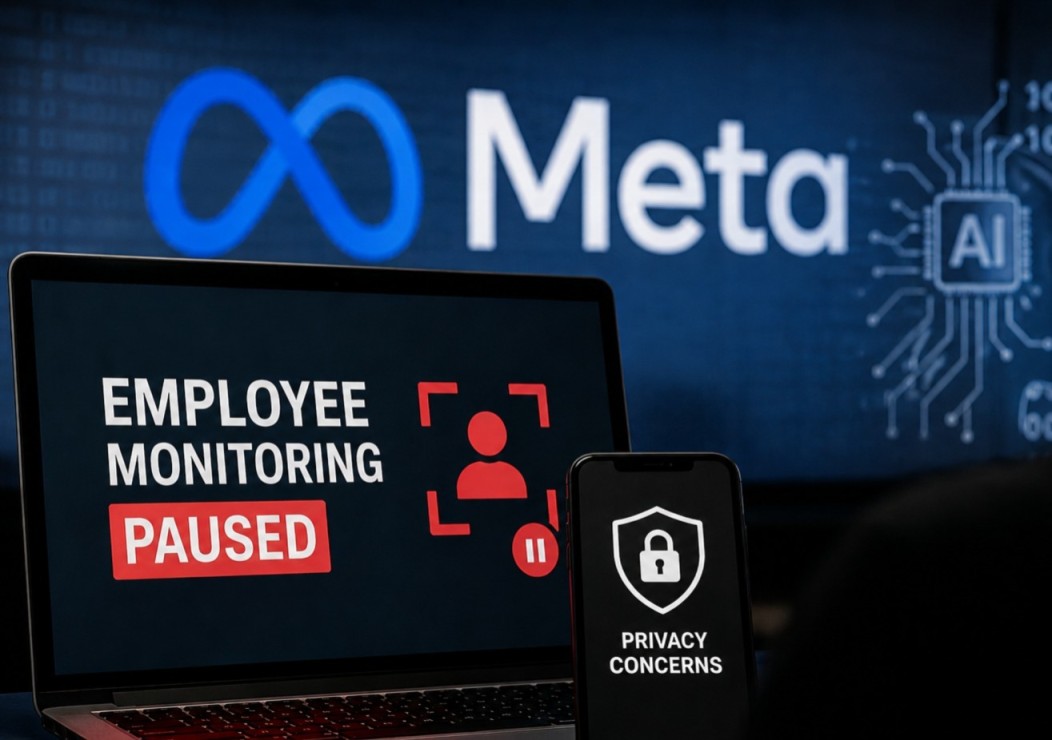
Meta, the tech giant known for its continuous advancements in artificial intelligence, has recently halted an internal initiative aimed at gathering employee activity data. The program, identified as the Model Capability Initiative, was designed to monitor various employee activities such as keyboard usage, mouse movements, and screen interactions to train AI models. This decision to pause the initiative comes after facing significant privacy concerns and opposition from employees.
The initiative faced backlash from within the company, with more than 1,600 employees signing a petition to stop the collection of workplace activity data. Employees expressed concerns about privacy, consent, and the potential erosion of trust between the workforce and the company. Despite Meta’s assertion that the program included privacy safeguards and that no improper access to the data had occurred, the company decided to suspend the initiative to reassess its system and data handling practices.
This development underscores the ongoing challenges and debates surrounding data collection for AI development—particularly the delicate balance between advancing technology and safeguarding employee privacy. Meta has been heavily investing in artificial intelligence, utilizing extensive computing power and resources to enhance its AI models. The company posits that insights from skilled employees could significantly contribute to improving these capabilities.
The controversy at Meta is indicative of the broader discussions taking place in the tech industry regarding ethical data usage for AI training. As companies continue to push the boundaries of technological innovation, they also grapple with the imperative to respect and protect personal privacy. Meta’s decision to pause and review its data practices reflects an acknowledgment of these complex issues and the need for careful consideration in their approach to data collection.