
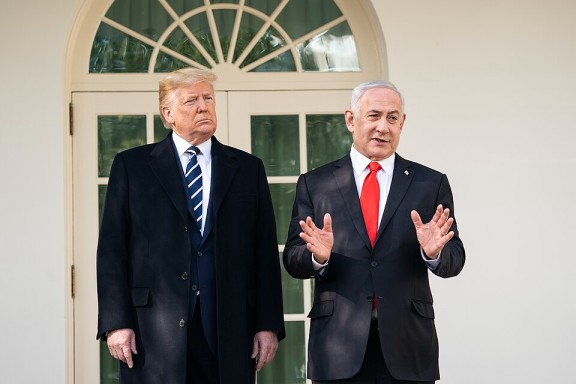
Israeli Prime Minister Benjamin Netanyahu engaged in a conversation with US President Donald Trump on Sunday night, focusing on the ongoing tensions with Iran. Discussions centered on the potential resurgence of conflict with Iran and the implications of Trump’s recent diplomatic visit to China. Following this discussion, Netanyahu planned to meet with his senior advisors and ministers in Jerusalem for a security briefing, a session that typically includes key figures such as Foreign Minister Gideon Sa’ar and Defense Minister Israel Katz.
Recent reports indicate that both Israel and the United States are preparing for possible renewed military actions against Iran. This development follows a drone attack on a UAE nuclear power plant, highlighting the region’s instability. President Trump is slated to hold a critical meeting with his national security team to evaluate military strategies regarding Iran. Despite a pause in negotiations following an April 8 ceasefire, Trump remains optimistic about reaching a deal with Iran, though he issued a stark warning that time is running out for Tehran to act.
In related developments, President Trump returned from a summit in China, where he discussed regional security matters with President Xi Jinping. Notably, Xi pledged not to support Iran with military aid and offered assistance in reopening the Strait of Hormuz, a crucial passage for global oil distribution currently under Iranian blockade. Meanwhile, Trump expressed confidence that Iran is inclined towards negotiation, suggesting that Tehran might soon propose updated terms for a potential agreement.
The Iranian response has been vocal, with military spokesperson Abolfazl Shekarchi issuing a warning against any renewed US attacks. Iran’s stance remains firm as it demands the lifting of US sanctions and the release of frozen assets, while also calling for a cessation of hostilities, including those involving Israel and Hezbollah. Iranian media reports indicate dissatisfaction with the US’s lack of concrete concessions in the negotiations, which could lead to an impasse.
Amid these tensions, a drone strike near the Barakah Nuclear Power Plant in Abu Dhabi raised alarms, though no injuries or radiation impacts were reported. The incident drew condemnation from Rafael Grossi, the head of the UN’s nuclear agency, who emphasized that military actions threatening nuclear safety are indefensible. The UAE has accused Iran of orchestrating attacks on its infrastructure, adding to the complex geopolitical dynamics in the region. As developments unfold, all eyes remain on the diplomatic maneuvers and military strategies of the involved nations.