
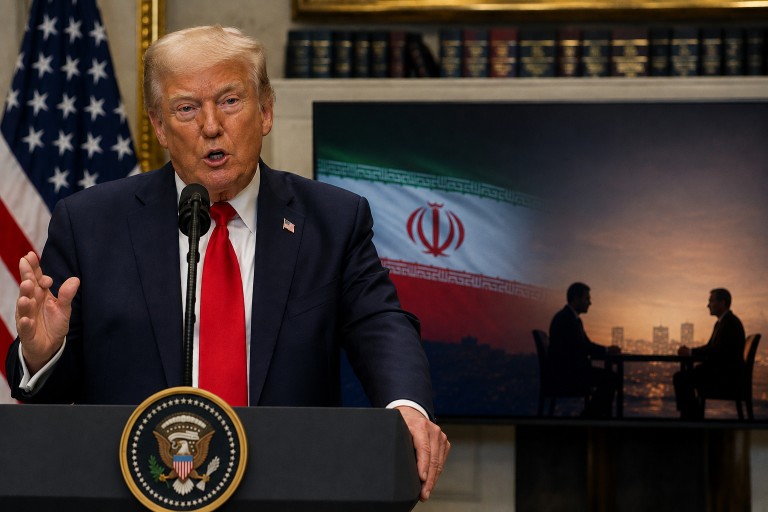
In a significant development, U.S. President Donald Trump announced that a planned military strike against Iran was called off. The decision came after reports suggested that negotiations were nearing a framework agreement to reopen the strategic Strait of Hormuz and address international concerns regarding Iran’s nuclear ambitions. The move to halt the attack followed appeals from Iran and several other Middle Eastern nations, with Trump noting that Israel had expressed support for the decision.
Contrary to Trump’s statements, Iranian officials have refuted the notion that they requested any cessation of military actions, labeling the claim as false. They have maintained that Iran’s military forces remain on high alert, ready to respond to any potential aggression. Iranian authorities have issued stark warnings that any military interventions by the United States or Israel would be met with a robust counterattack, potentially targeting key regional energy infrastructures.
The high-stakes situation has kept global energy markets in a state of tension, as disruptions in shipping activities through the Strait of Hormuz add to broader concerns over oil supply stability and regional security. The strait, a vital waterway for the transport of a significant portion of the world’s petroleum, remains a focal point in the geopolitical standoff.
The ongoing diplomatic and military maneuverings highlight the fragile nature of the current situation in the Middle East, with both sides delivering mixed messages over the potential for conflict resolution. As stakeholders in the region and beyond closely monitor developments, the international community remains vigilant over the evolving dynamics and their implications for global energy markets.