
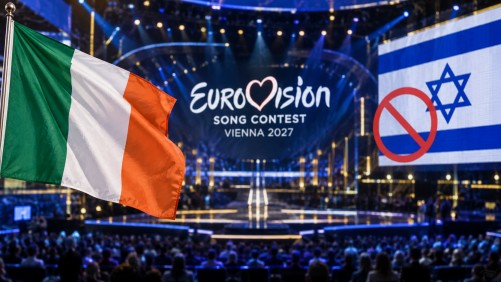
Ireland’s decision to withdraw from the 2027 Eurovision Song Contest underscores a growing international concern over the humanitarian crisis in Gaza. By opting out of the popular European event, Ireland’s public broadcaster, RTÉ, aims to draw attention to the ongoing conflict and the accompanying civilian suffering.
RTÉ announced that it could not justify participating in the annual music competition given the current situation in Gaza, where access for international journalists remains heavily restricted. The broadcaster’s stance remains consistent with its previous decision to boycott the 2026 contest. This move aligns with other nations like the Netherlands, which has also announced it will not participate in 2027, although it is exploring options for another broadcaster to potentially represent the country.
The European Broadcasting Union (EBU), responsible for organizing Eurovision, has expressed respect for Ireland’s decision. The EBU maintains hope for Ireland’s future return to the competition, underscoring the contest’s spirit of unity and cultural exchange amid complex geopolitical landscapes.
The 2027 Eurovision Song Contest is set to take place in Burgas, Bulgaria, in May. As of now, countries such as Spain, Iceland, and Slovenia, which joined Ireland in boycotting the 2026 event following the EBU’s decision to allow Israel’s participation, have yet to declare their intentions for the upcoming contest.
RTÉ’s decision highlights the intersection of cultural events and global political issues, showcasing how nations use international platforms to express solidarity and concern over humanitarian issues. As the situation in Gaza continues to evolve, the stance of other countries regarding their participation in Eurovision remains closely watched.