
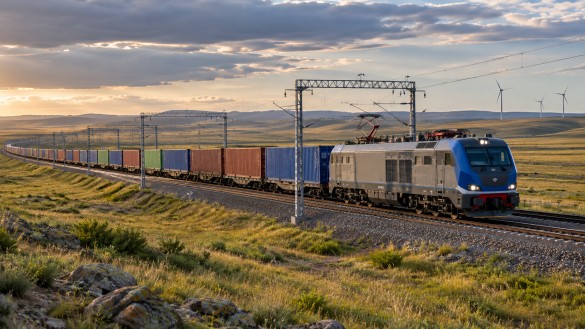
Kazakhstan is taking significant steps to enhance the Trans-Caspian International Transport Route, known as the Middle Corridor, aiming to boost trade connectivity between Asia and Europe while ensuring environmental sustainability. This initiative was highlighted during a session organized by Kazakhstan’s Ministry of Trade and Integration and QazTrade at the 31st United Nations Climate Change Conference (COP31) in Türkiye on November 16.
Spanning nearly 7,000 kilometers, the Middle Corridor offers an alternative trade route from Asia to European markets, traversing Kazakhstan, the Caspian Sea, and the South Caucasus. The route has witnessed a substantial increase in freight activity, with volumes surging from 800,000 tonnes in 2020 to 4.5 million tonnes in 2024. Container transportation also saw a rise, reaching around 77,000 twenty-foot equivalent units (TEUs) in 2025, marking a 36% increase from the previous year.
To further develop this corridor, Kazakhstan plans to implement digital logistics systems, expand transport capacity, and adhere to stricter environmental standards. Vice Minister of Trade and Integration Zhanel Kushukova emphasized that Kazakhstan’s export competitiveness relies not just on product quality and environmental standards but also on efficient international transportation.
Efforts to promote eco-friendly trade infrastructure are evident at the Port of Kuryk on Kazakhstan’s Caspian coast, which has earned EcoPorts certification and ISO 14001 environmental management certification. These certifications reflect the country’s commitment to responsible port operations.
Digitalization forms a crucial part of Kazakhstan’s strategy, with plans to enhance coordination among participating countries, introduce unified digital systems, and improve cargo tracking transparency. Such measures are expected to minimize administrative delays and bolster the reliability of international shipments.
Kazakhstan is optimistic that fostering closer cooperation among countries along the corridor will be pivotal in transforming the Middle Corridor into an efficient and environmentally sustainable trade route between Asia and Europe.