
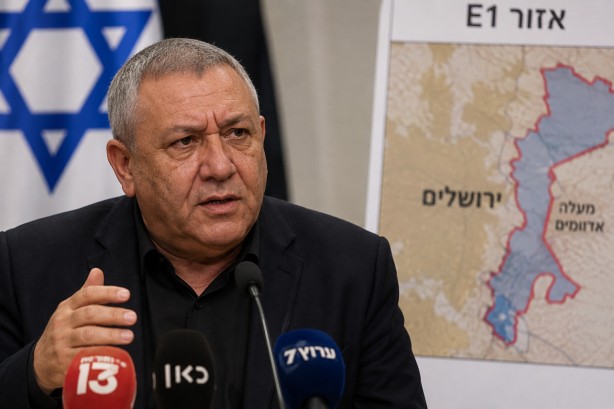
Amid the unfolding political landscape in Israel, Gadi Eisenkot, leader of the Yashar party and a key figure in the nation’s election race, has voiced strong opposition to the E1 settlement plan in the West Bank. Eisenkot, responding to recent developments, dismissed the idea of a two-state solution as impractical following the Hamas attack on October 7, 2023. He emphasized that the E1 project, which aims to expand settlements between Jerusalem and Ma’ale Adumim, could harm Israel’s global reputation and complicate territorial continuity between major Palestinian areas.
The Israeli government recently advanced the E1 initiative by opening a tender for more than 1,000 housing units, a move that has sparked significant international backlash. The European Union has reportedly considered taking actions against Israel should the construction continue. Eisenkot’s criticism highlights the potential diplomatic ramifications, stressing the project’s adverse effects on Israel’s international standing.
In addition to his stance on the E1 plan, Eisenkot has targeted Finance Minister Bezalel Smotrich and National Security Minister Itamar Ben Gvir, accusing them of exacerbating settler violence in the West Bank. He contends that their policies have undermined the Israel Defense Forces’ authority in the region, consequently damaging Israel’s international legitimacy and compromising its national interests.
Smotrich, in defense of the settlement expansion, has dismissed Eisenkot’s concerns. He argues that the development in E1 is crucial to preventing the establishment of a Palestinian state near Jerusalem. This ongoing debate underscores the complex and contentious nature of settlement policies and their implications for regional stability and international relations.