
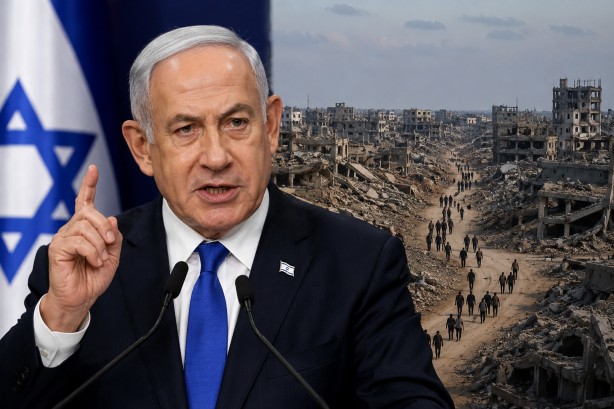
Israeli Prime Minister Benjamin Netanyahu has firmly stated that Israeli forces will not withdraw from Gaza until Hamas is fully disarmed, dismissing a US-supported proposal that ties military withdrawal to a comprehensive peace accord. Israeli authorities have highlighted intelligence reports suggesting that Hamas continues to recruit fighters, reconstruct its military infrastructure, and acquire more weapons. Israel argues that pulling back troops before ensuring Hamas’ disarmament could enable the group to regain control over Gaza, posing renewed security risks.
The US-brokered ceasefire proposal outlines several key steps: Hamas surrendering its weapons, dismantling its network of tunnels, a phased withdrawal of Israeli forces, the formation of a Palestinian technocratic administration, the deployment of an international security force, and the reconstruction of Gaza. Despite these proposals, the situation remains tense as Israeli airstrikes over recent days have reportedly resulted in the deaths of at least 17 people, including children.
In a separate development, Palestinians organized a mass funeral following the recovery of more than 100 bodies from the site of a significant Israeli airstrike in the Sabra neighborhood of Gaza City, which occurred in November 2023. Rescue teams continue their efforts, with many victims still feared to be trapped under the debris, highlighting the ongoing humanitarian crisis amid the conflict.
The current hostilities were triggered by a deadly attack from Hamas on October 7, 2023, targeting southern Israel. This assault led to the deaths of approximately 1,200 people and the abduction of 251 hostages, sparking the ongoing conflict in Gaza. As the situation unfolds, the international community closely watches developments, hoping for a resolution that can bring lasting peace to the region.