
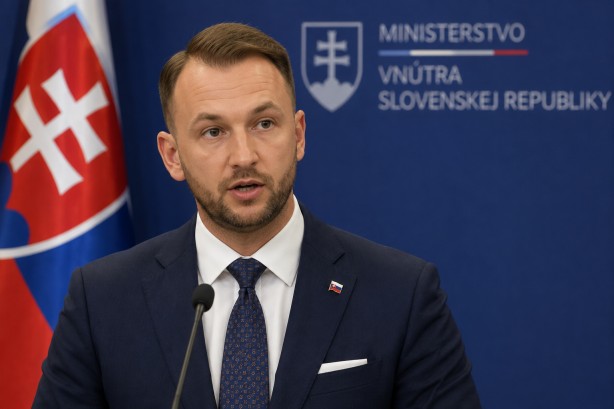
Slovak Interior Minister Matúš Šutaj Eštok has voiced concerns over what he perceives as the European Union’s inconsistent approach to the rule of law in Hungary. In a recent television appearance in Slovakia, Eštok accused the EU of adopting a double standard by choosing not to strongly react to political changes in Hungary under Prime Minister Péter Magyar, contrasting this with the EU’s historically tougher responses to similar situations.
Eštok highlighted several controversial developments in Hungary, such as the dismissal of the president, a series of constitutional amendments, and new restrictions imposed on members of parliament. Additionally, he pointed to reforms affecting the public broadcaster as areas of concern. He argued that if these changes had occurred under the tenure of former Prime Minister Viktor Orbán, the EU’s reaction would likely have been more severe, potentially leading to criticism and sanctions.
The Slovak minister further questioned the European Commission’s apparent lack of scrutiny concerning Hungary’s recent political maneuvers. He suggested that these actions have not been met with the same level of examination from EU institutions as might be expected. This sentiment echoes earlier remarks from Slovak Foreign Minister Juraj Blanár, who criticized the constitutional changes impacting the Hungarian presidency, asserting they were not aligned with the principles of the rule of law.
The comments from Eštok contribute to the ongoing debate surrounding how the European Union manages and responds to democratic and legal developments within its member states, particularly focusing on Hungary. This discourse raises broader questions about the EU’s role and consistency in upholding democratic standards across its nations.