
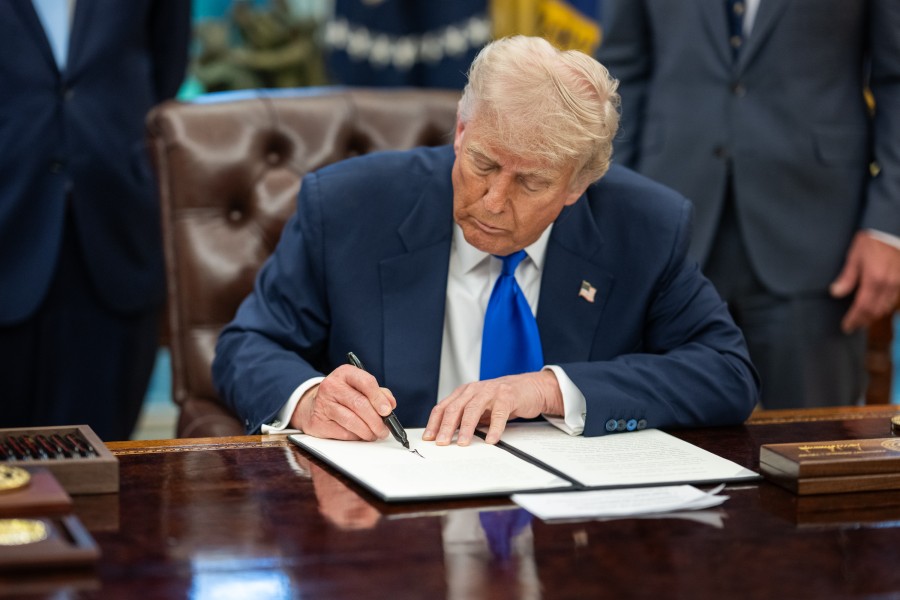
In a recent address from the White House, US President Donald Trump emphasized America’s readiness to impose further measures on Iran if it fails to adhere to agreements designed to curb its nuclear ambitions. Trump reiterated that halting Iran’s pursuit of nuclear weapons is a critical objective for his administration, highlighting the dangers of nuclear proliferation as a greater threat than potential economic repercussions. He underscored the United States’ willingness to respond decisively should Iran violate its commitments or act in ways that destabilize the region.
President Trump also pointed to the reopening of the Strait of Hormuz as a significant success for the global energy sector and international trade. This strategic waterway is crucial for the transportation of oil and natural gas worldwide. The announcement comes amid ongoing diplomatic negotiations between Washington and Tehran, following a memorandum of understanding reached last week. This agreement touches on maritime security and sanctions relief, with further discussions concerning Iran’s nuclear program planned over a 60-day negotiation window.
US Vice President JD Vance noted that Iran has consented to allow the International Atomic Energy Agency inspectors back into the country, marking an essential step in preventing the development of nuclear weapons. However, Iranian officials contested this claim, asserting that no new commitments regarding their nuclear activities have been agreed upon. Despite this, Iranian negotiators have signaled that talks remain active, tying broader regional concerns like maritime security and sanctions relief to forthcoming discussions.
As efforts to stabilize the region continue, questions linger about the shipping operations through the Strait of Hormuz. While US officials have stated that energy shipments have returned to normal, independent data shows that vessel traffic has yet to reach pre-conflict levels. The ongoing situation is set against a backdrop of persistent regional tensions involving Iran, Israel, and Lebanon. Israeli authorities have voiced apprehensions about the current diplomatic framework, arguing that it does not sufficiently address Iran’s nuclear and missile capabilities.
The United States has maintained its stance that preventing Iran from acquiring nuclear weapons is paramount, while also striving to uphold regional stability through a strategy that combines diplomatic engagement with deterrence. As negotiations progress, the international community remains watchful of developments that could significantly influence the geopolitical landscape.