
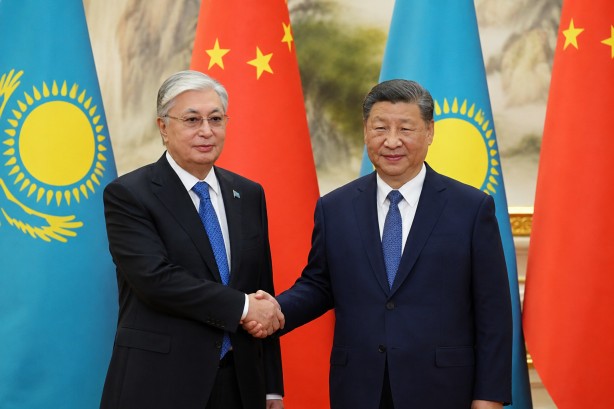
During the 2026 World Artificial Intelligence Conference held in Shanghai, Chinese President Xi Jinping and Kazakhstan President Kassym-Jomart Tokayev held a meeting to reinforce the strategic partnership between their nations. President Xi emphasized the importance of deepening cooperation by aligning development strategies across multiple sectors. He called for an expansion in trade, cross-border e-commerce, and initiatives in energy, transport, and the digital economy. Xi also highlighted the need for collaboration in artificial intelligence, education, healthcare, and science, along with greater engagement on multilateral platforms such as the United Nations and the Shanghai Cooperation Organization.
President Tokayev described China as Kazakhstan’s foremost partner in foreign policy, underlining his country’s commitment to broaden cooperation. He expressed support for strengthening ties in trade, investment, and transportation, as well as in agriculture, energy, and AI governance. Tokayev’s remarks underscored the growing significance of China in Kazakhstan’s international relations and the mutual benefits of the two countries’ collaboration.
The meeting concluded with both leaders overseeing the signing of several cooperative agreements that encompass a range of sectors. These agreements aim to enhance cooperation in trade, transport, finance, and media. The accords are expected to facilitate greater engagement between the two nations and contribute to their economic and strategic interests.
As China and Kazakhstan seek to align their development goals, the focus on artificial intelligence and other emerging technologies reflects their commitment to innovation and modernization. Both countries are looking to leverage their strengths in these areas to achieve mutual growth and address global challenges.
This meeting between President Xi and President Tokayev marks a significant step in solidifying the partnership between China and Kazakhstan. As both countries continue to expand their cooperation, the agreements signed during the conference are poised to have a lasting impact on their bilateral relations and the broader region.